What's the Difference Between a Three-Season and Four-Season Sunroom?
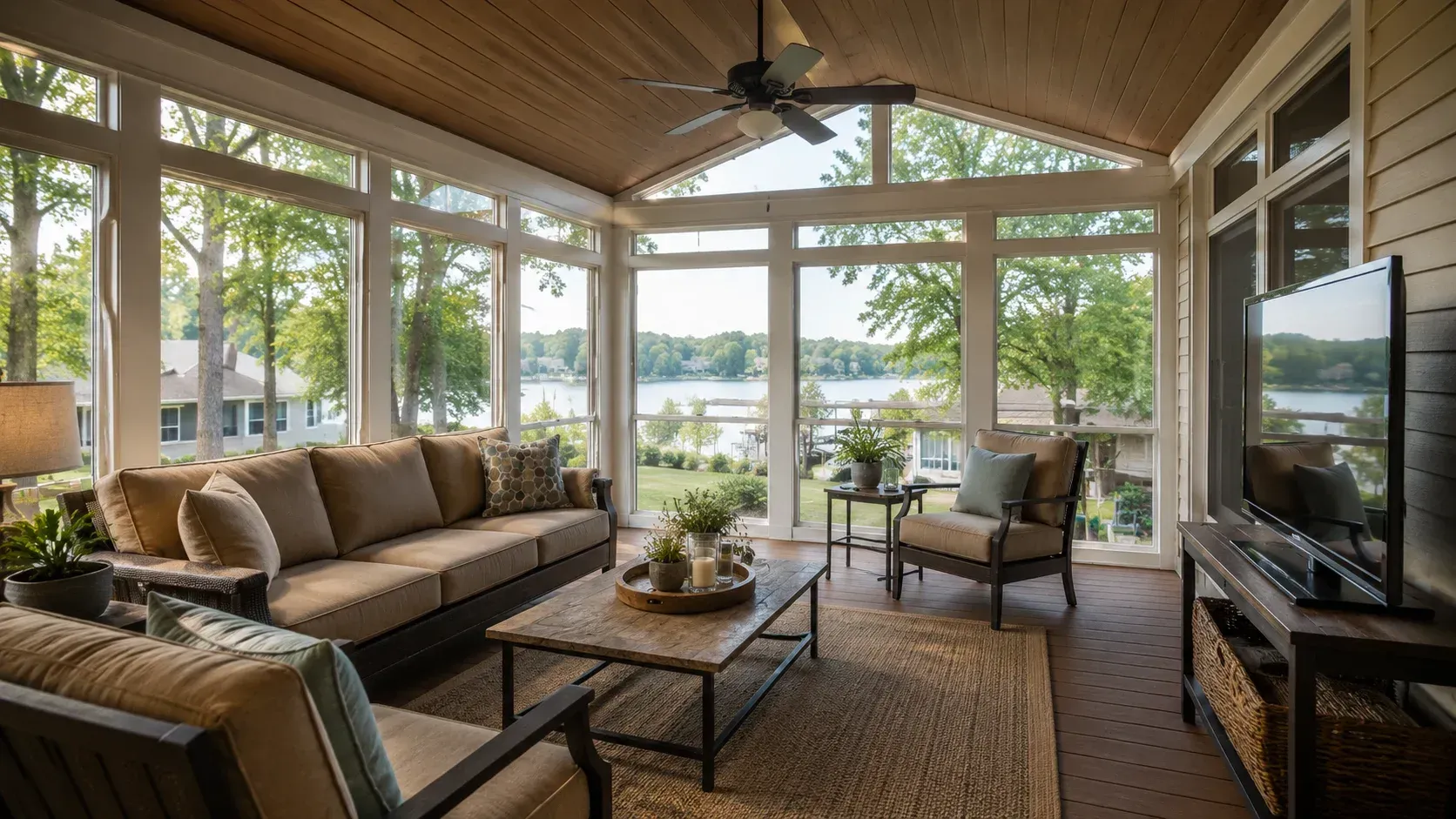
Table of Contents
- Introduction
- What Is a Three-Season Sunroom?
- What Is a Four-Season Sunroom?
- Key Differences at a Glance
- Insulation and Temperature Control
- Cost Considerations
- Year-Round Usability
- Which Sunroom Fits Your Needs?
- Conclusion
- Frequently Asked Questions
Key Takeaways
- A three-season sunroom is designed for spring, summer, and fall use, while a four-season sunroom is insulated and climate-controlled for year-round comfort.
- Four-season sunrooms cost more upfront because they include insulation, heating, and cooling that three-season rooms don't have.
- Three-season sunrooms are a good fit if you want an affordable space to enjoy during milder months without heating and cooling costs.
- Four-season sunrooms function like a true extension of your home and can add usable square footage you can enjoy in any weather.
- Your climate, budget, and how you plan to use the space are the three biggest factors in deciding which type is right for you.
Introduction
The main difference is that a three-season sunroom is built for use in spring, summer, and fall, while a four-season sunroom is fully insulated and climate-controlled so you can use it comfortably all year long. A three-season room costs less but isn't heated or cooled for extreme temperatures, whereas a four-season room functions as a true extension of your home, which is worth understanding before you plan a sunroom addition.
Choosing the wrong type can mean building a space you can't use when you want to, or spending more than you need to for features that don't fit your lifestyle. This guide breaks down the real differences between the two - insulation, cost, comfort, and usability - so you can decide which one makes sense for your home, your climate, and your budget.
What Is a Three-Season Sunroom?
A three-season sunroom is designed to be used during the milder parts of the year - spring, summer, and fall. It's a bright, comfortable space with lots of windows that lets you enjoy the outdoors while staying protected from bugs, wind, and rain.
The key thing to understand is that it's not built for extreme temperatures. Three-season rooms typically use single-pane glass or lighter construction, and they aren't connected to your home's heating and cooling system. That keeps the cost down.
In hot summer months, these rooms can get warm, and in the dead of winter, they get cold. That's the trade-off. For a lot of homeowners, though, having a comfortable space three seasons out of the year is exactly what they want and need.
What Is a Four-Season Sunroom?
A four-season sunroom is built to be used comfortably all year, no matter the weather outside. It's fully insulated, uses energy-efficient windows, and connects to your home's heating and cooling system - or has its own.
Because it's insulated and climate-controlled, a four-season room functions like any other room in your house. You can use it in the middle of winter or the peak of summer and stay comfortable. Many people use these as extra living rooms, home offices, or dining spaces.
This type of construction costs more. The insulation, better windows, and HVAC connection all add to the price. But you get a space you can truly use year-round, and it often adds real living square footage to your home.
Key Differences at a Glance
Here's how the two compare in plain terms.
Usability: Three-season rooms work for spring, summer, and fall. Four-season rooms work all year.
Insulation: Three-season rooms have minimal or no insulation. Four-season rooms are fully insulated in the walls, roof, and floor.
Windows: Three-season rooms often use single-pane glass. Four-season rooms use double-pane, energy-efficient glass.
Heating and cooling: Three-season rooms aren't connected to HVAC. Four-season rooms are climate-controlled.
Cost: Three-season rooms cost less. Four-season rooms cost more upfront and to operate.
Added home value: Four-season rooms typically add more usable square footage and can factor into your home's value differently than three-season rooms.
Insulation and Temperature Control
This is really the heart of the difference between the two.
A three-season sunroom has little to no insulation. The walls, roof, and windows are lighter, which means outside temperatures affect the inside more directly. On a mild spring day, it's perfect. On a freezing January morning or a scorching August afternoon, it's not comfortable.
A four-season sunroom is built with insulation in the walls, roof, and often the floor. Combined with energy-efficient windows and a connection to heating and cooling, this keeps the room comfortable no matter what's happening outside.
If you live somewhere with real winters and hot summers - like much of Missouri - insulation is what determines whether you can actually use your sunroom in December and July. That's a big part of the decision.
Cost Considerations
Cost is often the deciding factor, so it helps to understand what drives the price difference.
Three-season sunrooms cost less to build. They use simpler construction, lighter materials, and don't require HVAC work. This makes them an appealing option for homeowners who want extra space without a big investment.
Four-season sunrooms cost more upfront. Insulation, energy-efficient windows, and connecting to your heating and cooling system all add to the price. You're also looking at ongoing costs to heat and cool the space, just like any other room.
The insulated sunroom cost is higher, but many homeowners feel the year-round use justifies it. It comes down to whether you'll use the space enough in cold and hot months to make the extra investment worthwhile.
Year-Round Usability
Think honestly about how and when you'd actually use a sunroom.
If you picture yourself sipping coffee on cool spring mornings, reading in the summer breeze, or enjoying fall afternoons, a three-season room covers all of that. You just won't be using it much in the coldest and hottest stretches of the year.
If you want a space that works as a genuine extra room - a home office you'll use in January, a dining area for holiday gatherings, a place to relax on a snowy evening - a four-season room is what delivers that. It's usable every single day of the year.
Your climate matters here too. In a place with mild weather most of the year, a three-season room gets a lot of use. In a place with harsh winters and hot summers, you'll get fewer usable days from a three-season room.
Which Sunroom Fits Your Needs?
Start with how you plan to use the space. If you want a comfortable spot for the milder months and want to keep costs down, a three-season room is a practical, affordable choice.
If you want a true extension of your living space that you can use in any weather, and you have the budget for it, a four-season room makes more sense. It costs more but gives you far more usable time.
Also consider your home and property. A sunroom is one of several ways to expand your outdoor living space. Some homeowners find that a covered patio installation or a well-built deck fits their needs and budget better than a full sunroom. It's worth thinking about all your options before committing.
Budget, climate, and intended use are the three questions to answer. Once you're clear on those, the right choice usually becomes obvious.
Conclusion
The difference between a three-season and four-season sunroom comes down to insulation, climate control, cost, and how much of the year you can comfortably use the space. Three-season rooms are more affordable and great for spring, summer, and fall. Four-season rooms cost more but give you a fully usable room in any weather.
Neither option is universally better. The right choice depends on your budget, your local climate, and how you plan to use the space. A homeowner in a mild climate who wants an affordable spot for nice-weather months has different needs than someone who wants a year-round home office in a region with cold winters.
Take time to think through how you'll actually use the space and what your budget allows. Understanding these differences puts you in a strong position to choose a sunroom that fits your life and gives you a space you'll enjoy for years.
Next Steps
If you're considering a sunroom and trying to decide which type fits your home, talking through your goals with someone who understands local construction and climate can help clarify your options. Getting clear, honest information about costs, construction, and how each type performs in your area lets you plan with confidence. There's no pressure here - just useful guidance to help you make a decision that fits your needs and budget.
Frequently Asked Questions
Can a three-season sunroom be converted to a four-season sunroom later?
Sometimes, but it's not always simple or cost-effective. Converting requires adding insulation, upgrading windows, and connecting to your heating and cooling system. Depending on how the original room was built, this can be a significant project. If you think you'll want year-round use eventually, it's often more economical to build a four-season room from the start.
How much more does a four-season sunroom cost than a three-season one?
A four-season sunroom typically costs significantly more due to insulation, energy-efficient windows, and HVAC integration. The exact difference depends on size, materials, and your home's setup. Beyond the upfront cost, four-season rooms also have ongoing heating and cooling expenses that three-season rooms don't.
Do I need a permit to build a sunroom?
In most areas, yes. Sunroom additions usually require building permits because they involve structural work and often electrical or HVAC connections. Requirements vary by location, so it's worth checking with your local building department or working with a contractor who handles permitting as part of the project.
Which sunroom type is better for a climate with cold winters?
A four-season sunroom is the better choice if you want to use the space during cold winters. Its insulation and climate control keep it comfortable when temperatures drop. A three-season room in a cold climate will be too cold to use for a good chunk of the year, which limits how much value you get from it.
Will a sunroom add value to my home?
A well-built sunroom can add usable living space, which many buyers find appealing. Four-season rooms often factor into square footage differently than three-season rooms because they're fully insulated and climate-controlled. That said, added value depends on many factors including quality of construction, local market, and how well the addition fits the home.
How long does it take to build a sunroom?
Timelines vary based on the type, size, and complexity of the project. A three-season room is generally faster to build than a four-season room, which involves more construction due to insulation and HVAC work. Weather, permitting, and material availability can also affect the timeline. Your contractor can give you a realistic estimate for your specific project.
Can I use a sunroom as a home office or extra bedroom?
A four-season sunroom works well as a home office, extra living space, or similar year-round use because it stays comfortable in any season. A three-season room can serve these purposes during milder months but isn't suited for year-round daily use. If you need the space available all year, a four-season room is the practical choice.
Recent Posts