Is It Time to Repair or Replace Your Deck in Branson, Missouri?
Key Takeaways
- The decision to repair or replace comes down to the extent of damage, the age of your deck, and the total cost of repairs versus replacement.
- Signs like soft wood, structural damage, loose railings, and extensive rot often mean replacement is the smarter choice than patching problems.
- A deck older than 15 to 20 years with multiple problem areas is typically a candidate for replacement rather than repair.
- Repair costs can add up quickly, and sometimes spending the money on repairs now means facing replacement in just a few years anyway.
- Getting a professional assessment helps you understand what you're dealing with and gives you real numbers to compare repair versus replacement options.
Table of Contents
- Introduction
- Understanding the Repair vs. Replace Question
- Signs Your Deck Needs More Than a Quick Fix
- Age of Your Deck Matters
- Calculating Repair Costs vs. Replacement Costs
- Structural Damage: When Repair Isn't Safe
- Considering New Materials When Replacing
- The Long-Term Picture
- Conclusion
- Frequently Asked Questions
Introduction
Whether you should repair or replace your Branson deck depends on the extent of damage, how old your deck is, and whether repairs will actually solve the problem long-term. If your deck shows signs of rot, structural damage, or loose railings, and it's over 15 years old, replacement is often the better investment than pouring money into repairs that might buy you only a few more years.
Branson's climate - with hot summers, cold winters, and significant moisture from nearby lakes and seasonal rains - creates real challenges for deck materials. This guide walks you through how to assess what your deck actually needs, understand the real costs involved, and make a decision that makes sense for your situation and your budget.
Understanding the Repair vs. Replace Question
This isn't always a clear-cut decision. Sometimes a deck just needs a couple boards replaced and some fasteners tightened. Other times, what looks like a small problem is actually the tip of a bigger iceberg.
The key difference is scope and expense. Repairs are worthwhile when you're fixing isolated problems - a cracked board here, a wobbly post there. Replacement makes more sense when the problems are widespread, involve structural components, or when the total repair bill gets close to the cost of a new deck anyway.
Think about it this way: if your repair bill is going to be 60% to 80% of a new deck's cost, you're usually better off replacing and getting a brand new structure that won't need significant work for another 15 to 25 years.
Signs Your Deck Needs More Than a Quick Fix
Soft or Spongy Wood
Press your thumb against the deck boards. If it leaves an indentation or the wood feels soft, that's rot. Rot doesn't stay in one spot - it spreads as moisture continues to get into the wood. Replacing one board might temporarily fix the problem, but more rot is probably hiding elsewhere.
Visible Cracks and Splits
A few small cracks are normal in wood. But if you're seeing large cracks, multiple splits, or cracks that seem to be getting worse season to season, that's a sign of structural stress. Those problems get worse, not better, and typically require more than just surface work.
Loose Railings or Posts
Safety is non-negotiable. If your railings wiggle or your posts feel unstable, that's a structural problem that needs fixing. This isn't something to put off. Loose railings are both a safety hazard and a sign that water has probably gotten into places it shouldn't be.
Fasteners Poking Up
Nails and screws that have worked their way up and out of the wood are annoying, but they're also a warning sign. They indicate that the wood underneath is shifting or that water has gotten in and caused swelling. More fasteners will likely pop up elsewhere.
Dark Stains or Discoloration
Dark spots or blotchy discoloration often mean mold or mildew, but sometimes they indicate water damage or the beginning of rot. If cleaning doesn't remove the stains and the area feels soft, it's rot. If it's just cosmetic, it's less urgent, but it's still a sign moisture is getting where it shouldn't.
Age of Your Deck Matters
A deck that's 10 years old with a few minor problems is usually worth repairing. A deck that's 20 years old with the same problems is probably ready to be replaced.
Pressure-treated wood decks typically last 15 to 20 years before major problems start showing up. If your deck is approaching that age and you're seeing damage, you're probably not far from needing a replacement anyway. Fixing problems now just delays the inevitable and costs you money in the meantime.
Older decks also tend to have cascading problems. One repair leads to the discovery of another problem. The budget creeps up, and before you know it, you've spent enough to buy a new deck and you still don't have a fully fixed structure.
Calculating Repair Costs vs. Replacement Costs
The math matters here, so it's worth doing it honestly. Write down what repairs you know about. Board replacement, railing repair, fastener work, any structural fixes needed. Get estimates if you can.
Then look up the ballpark cost of a new deck in your area. A new pressure-treated wood deck runs roughly 15 to 25 dollars per square foot. Composite decks cost more upfront - maybe 25 to 40 dollars per square foot - but they last longer and need less maintenance.
If repairs are going to cost 70% or more of a new deck, replacement wins. You get a warranty, new materials, and peace of mind. If repairs are significantly cheaper, fix what you can and plan for replacement down the road.
Don't forget to factor in the hassle and time. Repairs can drag on. You might discover more problems once work starts. Replacement is disruption too, but it's defined - a few weeks and you have a brand new deck.
Structural Damage: When Repair Isn't Safe
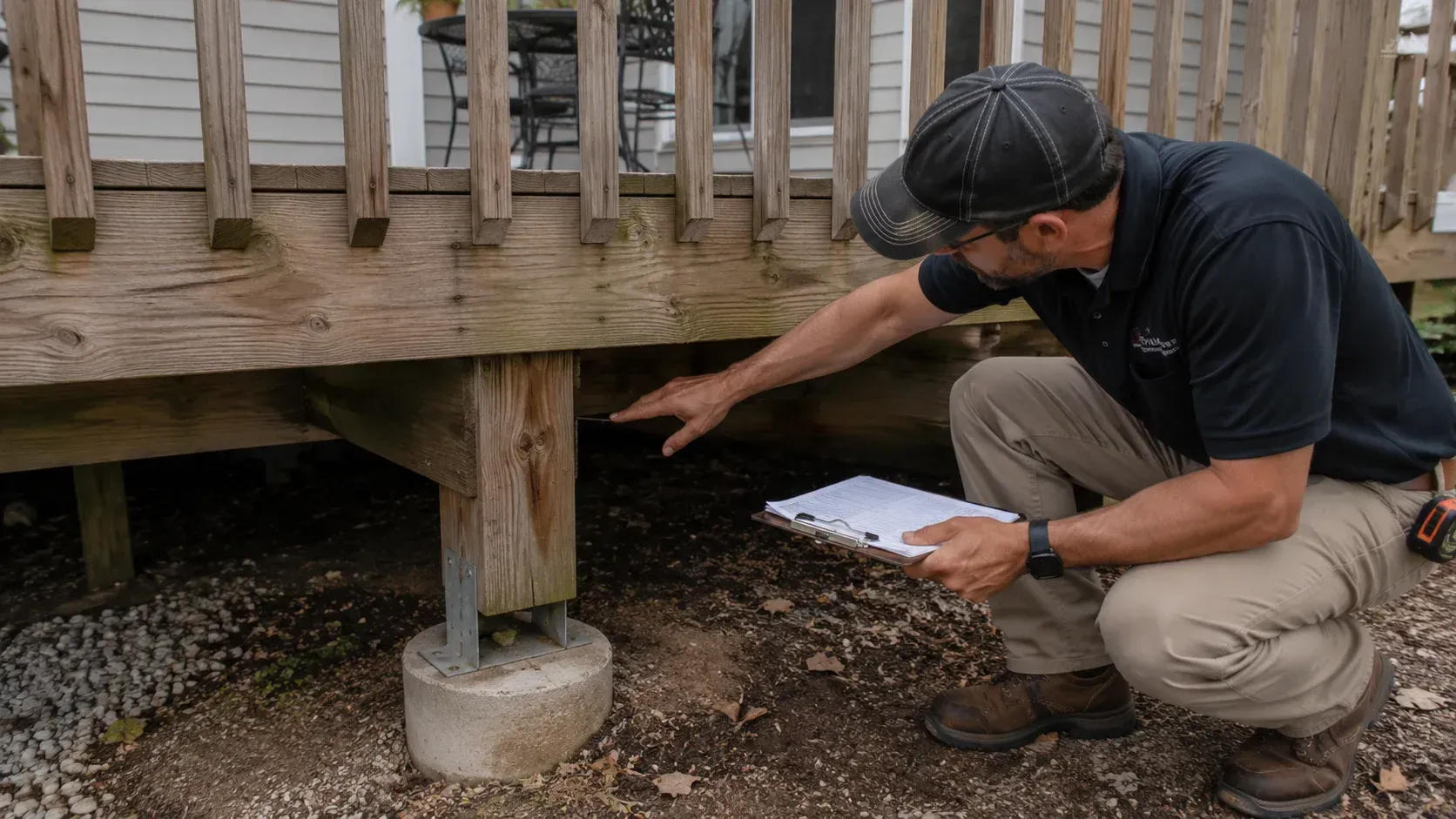
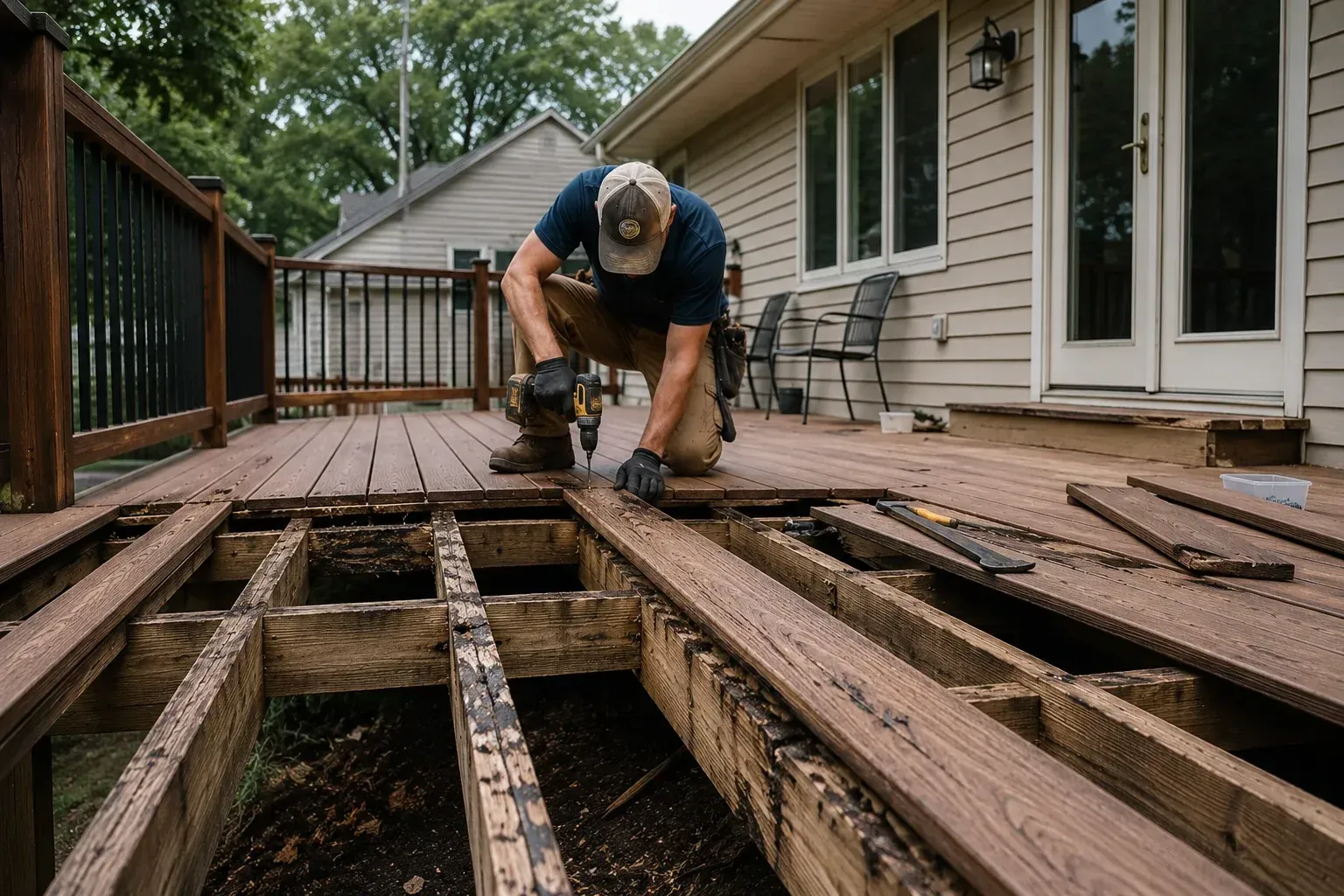
Some problems can't be repaired - they have to be fixed by replacement. If your deck's support structure is compromised - the posts, beams, or joist system - that's not a repair situation anymore. Those are the parts holding your deck up. If they're damaged, you can't just patch one section.
Soft structural components, broken posts, cracked support beams, or rot in the joists means the entire deck is at risk. This is a safety issue, and it's why professional assessment matters. What looks like a surface problem might actually be a structural one hiding underneath.
Considering New Materials When Replacing
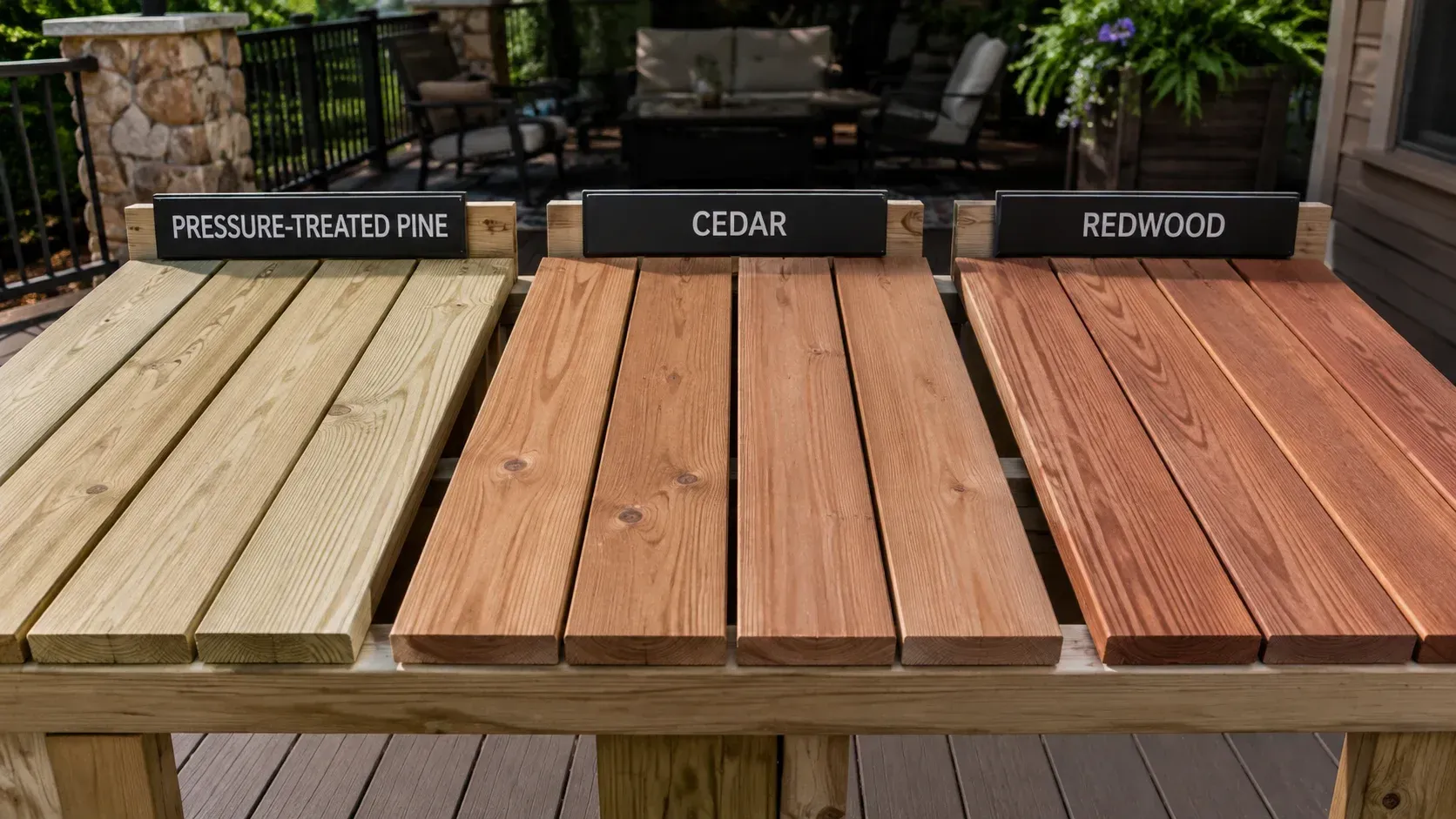
If you're going to replace, it's worth thinking about what material makes sense for Branson's climate. Pressure-treated wood is affordable but requires regular maintenance and will eventually rot like any wood deck. Composite decking costs more upfront but resists moisture and rot much better, which matters in a humid climate near water.
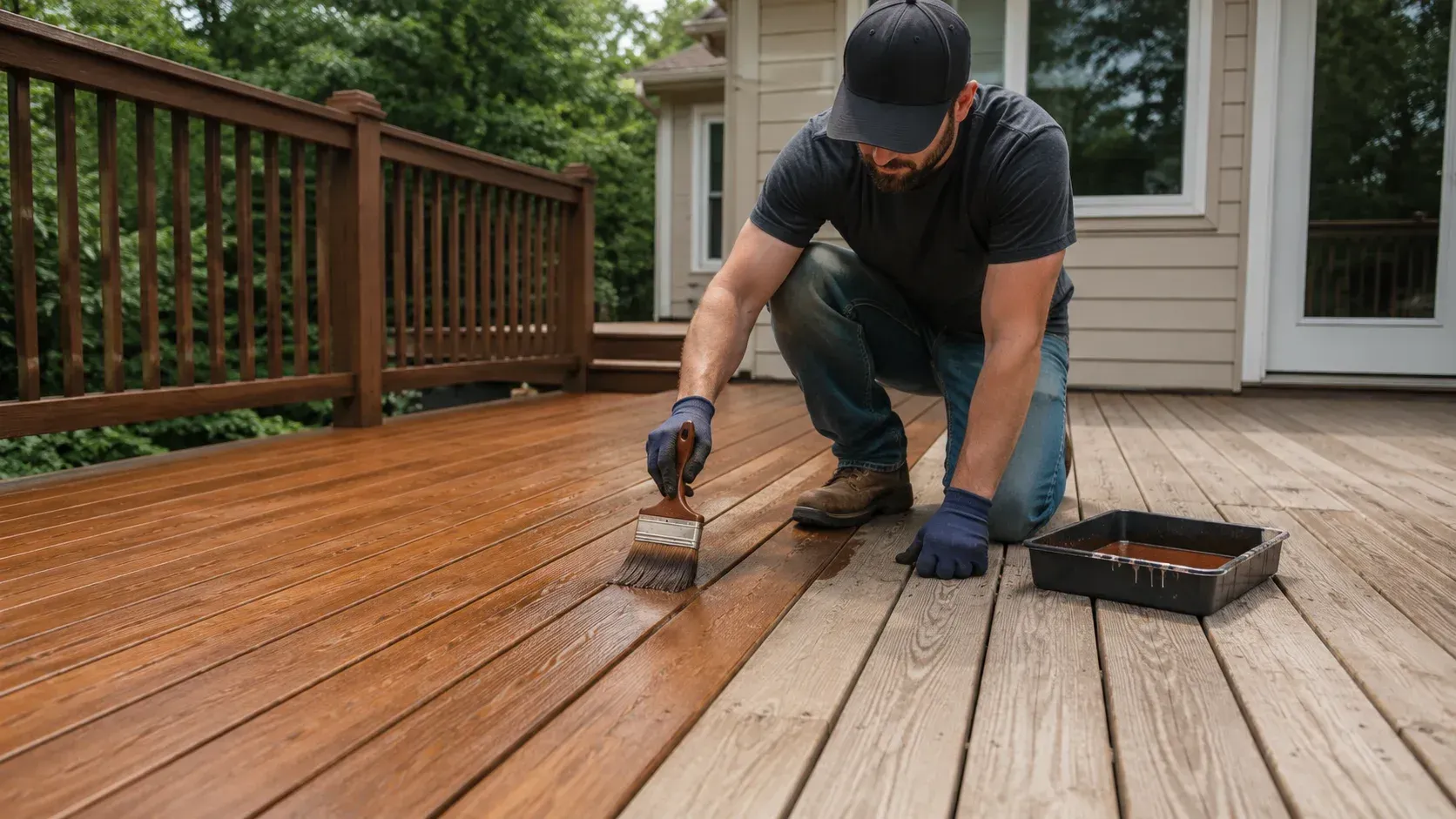
Wood decks have a look and feel that a lot of people prefer. You can stain them different colors, and they're a traditional choice. Just understand that you'll be staining or sealing every couple years to keep them maintained.
Composite is lower maintenance. You don't stain or seal it, and it doesn't rot. The trade-off is cost and aesthetics. Some people don't like the look or feel of composite. It's a personal choice, but material choice should be part of your replacement decision.
The Long-Term Picture
When you're deciding between repair and replace, think about where you want to be five years from now. If you repair now, what's the likelihood you're going to face another round of major repairs in five years? And if that's likely, are you really saving money?
Replacement puts you on a clock. A new deck built right will give you 15 to 25 years before you need to think about major work again, depending on the materials you choose. That's stability you can count on.
Repairs can be a temporary fix, and there's nothing wrong with that if you understand what you're getting. But if you're facing steady problems and increasing costs, replacement is probably the more sensible long-term choice.
Conclusion
The decision to repair or replace your Branson deck isn't always obvious, but looking at the extent of damage, the age of your deck, and comparing actual repair costs to replacement costs usually points you in the right direction. Decks over 15 years old with multiple problem areas and structural concerns are typically better replaced than repaired. Decks with isolated problems and good bones are usually worth fixing.
What matters most is getting clear information about what's actually wrong with your deck. Visual inspection helps, but soft wood and hidden rot under the surface can't always be spotted by looking. Understanding what you're dealing with - the real extent of damage - lets you make a decision based on facts rather than guessing.
Branson's climate is tough on deck materials, whether wood or composite. But a well-built deck made with quality materials and maintained properly will serve you well for years. Whether that's a repair today or a replacement, the point is getting your outdoor space back to something safe and enjoyable.
Next Steps
If you're trying to figure out whether your deck should be repaired or replaced, getting a professional assessment takes the guesswork out of the equation. Someone with experience can look at the damage, identify what you're not seeing on the surface, and give you honest information about whether repair or replacement makes sense in your situation. That information is worth the time, and it lets you make a decision you'll feel good about.
Frequently Asked Questions
How much does it cost to repair a deck versus replacing it?
Repair costs vary widely depending on what's wrong. A few board replacements might run a few hundred dollars. Structural repairs or extensive damage could cost several thousand. A new deck in Branson typically costs 15 to 40 dollars per square foot depending on size and materials. For a 200-square-foot deck, that's 3,000 to 8,000 dollars. If repairs are going to cost 60% to 80% of a new deck, replacement usually makes more sense.
What's the main sign that my deck needs replacement instead of repair?
Structural damage is the biggest red flag. Soft or rotting support posts, cracked beams, or compromised joists mean the whole deck is at risk. Other signs include age combined with multiple problems, extensive rot in the boards or structure, or when the total repair bill is getting close to the cost of a new deck anyway.
Can I replace just the boards and keep the structure?
Sometimes, if the posts, beams, and joists are solid, replacing the deck boards is a reasonable repair. But it's important to get those structural components inspected. Rot travels, and you might discover hidden damage once you start tearing up boards. What looks like a simple board replacement could turn into more extensive work.
How often do wood decks need maintenance in Branson?
Pressure-treated wood should be sealed or stained every 2 to 3 years to protect against moisture and UV damage. Branson's humidity and proximity to water means moisture is a constant challenge. If you don't want to maintain a wood deck regularly, composite or another low-maintenance material might be a better choice when you replace.
Is it worth replacing a 10-year-old deck if there's only minor damage?
Probably not. A 10-year-old deck with minor problems is usually worth repairing. You likely have another 5 to 10 years of life left, and fixing what's broken now buys you time. Once your deck gets closer to 15 or 20 years old, or if problems are widespread, replacement becomes more attractive.
What should I look for when deciding on replacement materials?
Think about maintenance commitment and budget. Wood is affordable and traditional but requires regular sealing or staining. Composite costs more upfront but doesn't need staining or sealing and resists moisture better - important in Branson's climate. Consider how much time and money you want to spend maintaining your deck over the next 15 to 20 years.
Should I get a professional to assess my deck?
Yes, especially if you're trying to decide between repair and replace. Visual inspection catches obvious problems, but rot and structural damage can be hidden. A professional can identify problems you might miss and give you concrete numbers to work with. That information is worth the investment and helps you make a better decision.
Recent Posts