Which Type of Wood Is Best for a Deck - Cedar, Redwood, or Pressure-Treated Pine?
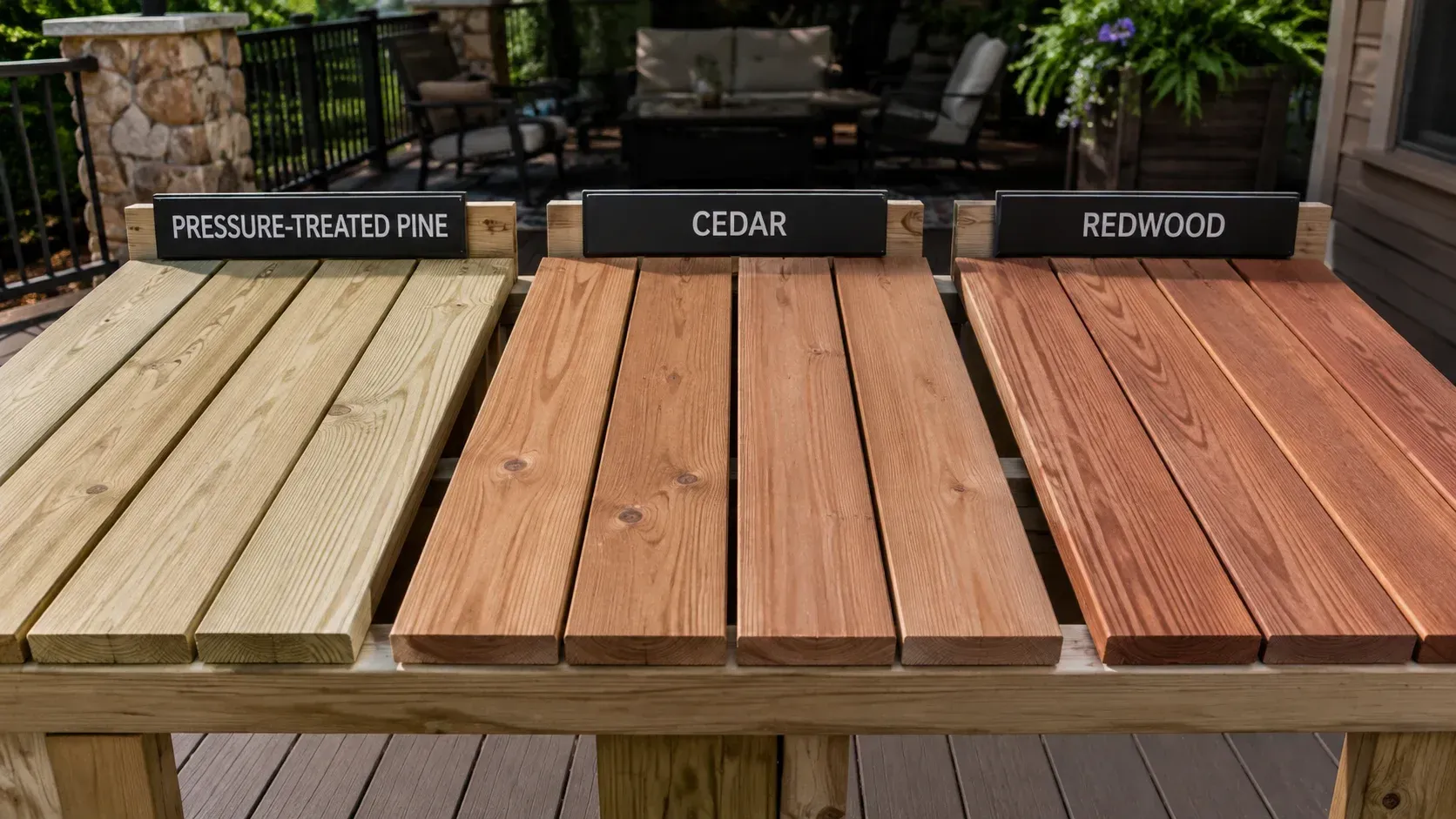
Table of Contents
- Introduction
- Understanding Your Wood Deck Options
- Pressure-Treated Pine: The Budget-Friendly Choice
- Cedar: The Natural Beauty Option
- Redwood: The Premium Selection
- Comparing Cost, Maintenance, and Durability
- Which Wood Handles Missouri's Climate Best?
- Making Your Decision
- Conclusion
- Frequently Asked Questions
Key Takeaways
- Pressure-treated pine is the most affordable option and resists rot and insects well, but it requires regular maintenance and doesn't look as natural as cedar or redwood.
- Cedar offers a beautiful natural look with good resistance to decay, though it costs more than pine and still needs periodic sealing.
- Redwood is the premium choice for appearance and natural durability, but it's the most expensive and can be hard to find in some regions.
- Your best choice depends on your budget, how much maintenance you're willing to do, and the look you want for your outdoor space.
- All three wood types need some level of maintenance to reach their full lifespan, so factor ongoing care into your decision.
Introduction
For most homeowners, pressure-treated pine is the best value for a deck, cedar is the best middle-ground choice for natural looks, and redwood is the premium option if budget isn't your main concern. The right choice really comes down to what matters most to you - cost, appearance, or how much maintenance you're willing to take on when building your wood deck.
Choosing the wrong material can mean spending more over time or ending up with a deck that doesn't hold up the way you hoped. This guide breaks down cedar, redwood, and pressure-treated pine so you can compare them honestly and pick the one that fits your budget and your goals for your outdoor space.
Understanding Your Wood Deck Options
When people talk about wood decks, they're usually choosing between three main types: pressure-treated pine, cedar, and redwood. Each has its own strengths and trade-offs.
The differences come down to a few key things: how much they cost, how they look, how long they last, and how much maintenance they need. There's no single "best" option for everyone. What works for one homeowner might not fit another's budget or style.
Understanding what each wood offers helps you match the material to your priorities. Let's look at each one in detail.
Pressure-Treated Pine: The Budget-Friendly Choice
Pressure-treated pine is the most common decking wood in the country, and for good reason. It's affordable, widely available, and treated with chemicals that protect it from rot and insects.
The Advantages
The biggest draw is cost. Pressure-treated pine typically runs about half the price of cedar and a third the price of redwood. If budget is your main concern, this is usually where people land.
It also resists insects and rot well because of the chemical treatment. Termites and moisture are less of a problem than with untreated wood. It's strong and holds up structurally, making it a solid choice for the frame and structure of any deck.
The Drawbacks
Pine doesn't look as natural or rich as cedar or redwood. It has a greenish tint when new that fades over time, and the grain isn't as attractive.
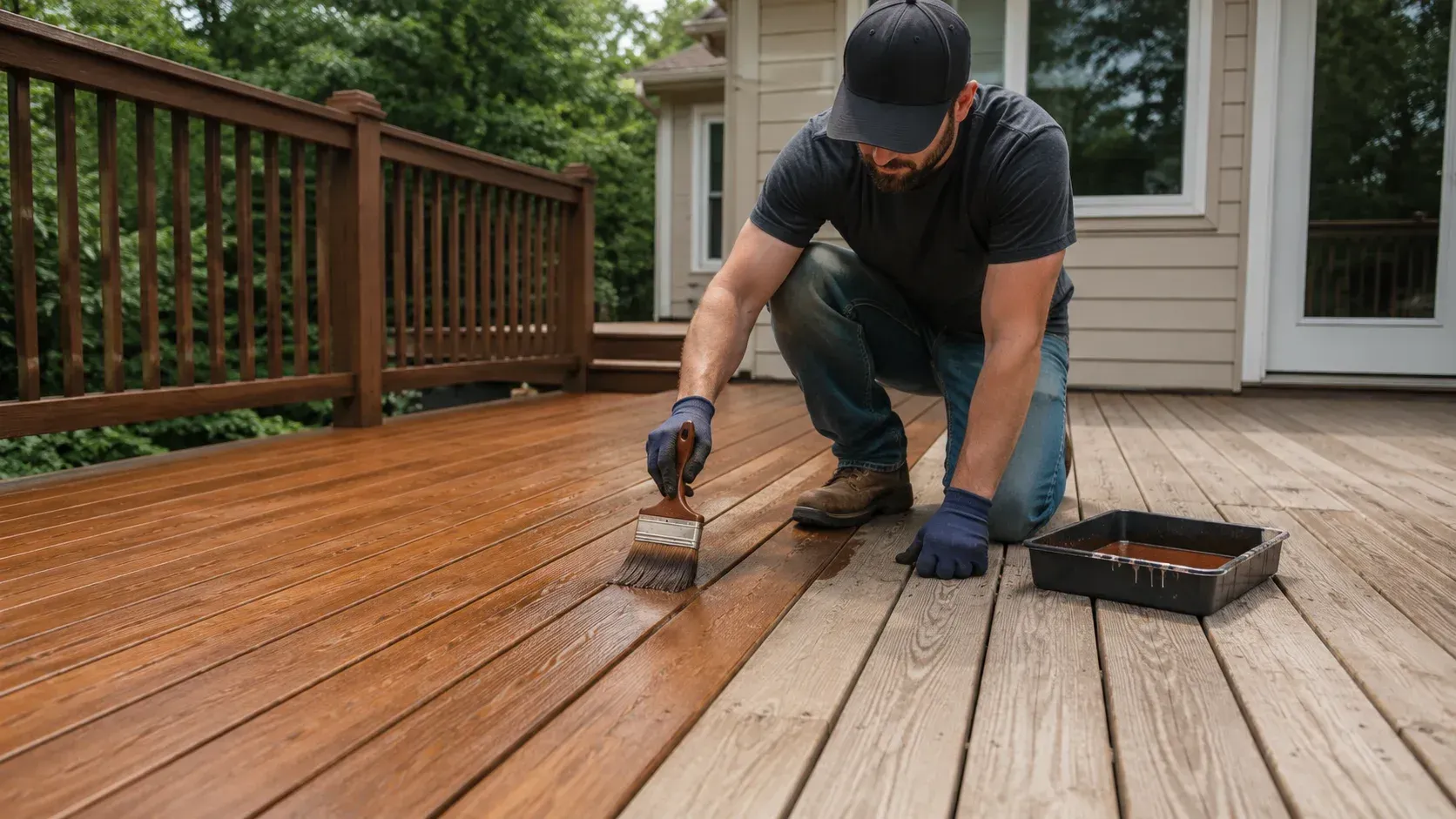
It also needs regular maintenance. You'll want to seal or stain it every couple of years to prevent cracking, warping, and splintering. And pine can warp or crack as it dries, especially if it wasn't properly dried before installation.
Cedar: The Natural Beauty Option
Cedar sits in the middle - more expensive than pine but more affordable than redwood. It's a popular choice for people who want a natural look without the premium price of redwood.
The Advantages
Cedar looks beautiful. It has a warm, natural color and an attractive grain that many homeowners love. It naturally resists rot and insects thanks to oils in the wood, so it doesn't rely on chemical treatment the way pine does.
It's also lightweight and stable. Cedar is less likely to warp or crack than pine, and it stays cooler underfoot in the sun, which is nice on hot days.
The Drawbacks
Cost is the main trade-off. Cedar costs noticeably more than pressure-treated pine. It's still cheaper than redwood, but it's a step up in price.
Cedar is also softer than pine, which means it can dent and scratch more easily. And while it resists rot naturally, it still needs sealing every few years to maintain its color and protect it from the elements. Left untreated, cedar weathers to a gray color, which some people like and others don't.
Redwood: The Premium Selection
Redwood is the top-tier choice for wood decking. It's prized for its beauty and natural durability, but it comes at a premium price.
The Advantages
Redwood is stunning. It has a rich, reddish color and a smooth, attractive grain that's hard to beat. Like cedar, it naturally resists rot and insects thanks to natural compounds in the wood.
It's also stable and holds up well over time. Redwood resists warping and cracking better than pine, and its natural beauty means many people leave it to weather naturally or just apply a clear sealer.
The Drawbacks
The cost is the big one. Redwood is the most expensive of the three by a significant margin. Depending on where you live, it can also be hard to find, since it's primarily grown on the West Coast.
Like the others, redwood still needs some maintenance. To keep its rich color, you'll need to seal it periodically. Left alone, it weathers to gray, just like cedar. And because it's a softer wood, it can scratch and dent.
Comparing Cost, Maintenance, and Durability
Here's how the three stack up in plain terms.
Cost: Pressure-treated pine is the cheapest. Cedar is moderate. Redwood is the most expensive. If you're on a tight budget, pine wins. If cost is no object, redwood is an option.
Maintenance: All three need maintenance, but the type varies. Pine needs the most regular sealing to prevent warping and cracking. Cedar and redwood need sealing mainly to preserve their color - left alone, they weather gracefully to gray but stay structurally sound longer than untreated pine would.
Durability: Pressure-treated pine resists rot and insects well because of its chemical treatment. Cedar and redwood resist naturally but aren't treated, so extremely wet conditions can still be a challenge over decades. All three, properly maintained, can last 15 to 25 years or more.
Appearance: Redwood and cedar look more natural and rich. Pine looks more utilitarian. This is purely personal preference, but it matters to a lot of people.
Which Wood Handles Missouri's Climate Best?
Missouri's climate brings humid summers, cold winters, and plenty of moisture throughout the year. This affects how each wood performs.
Pressure-treated pine handles moisture well because of its treatment, which is a real advantage in a humid climate. The downside is you need to stay on top of sealing to prevent the wood from cracking as it goes through wet and dry cycles.
Cedar and redwood resist moisture naturally, but in a very humid environment, regular sealing helps them last longer. The natural oils help, but they're not a substitute for maintenance in a challenging climate.
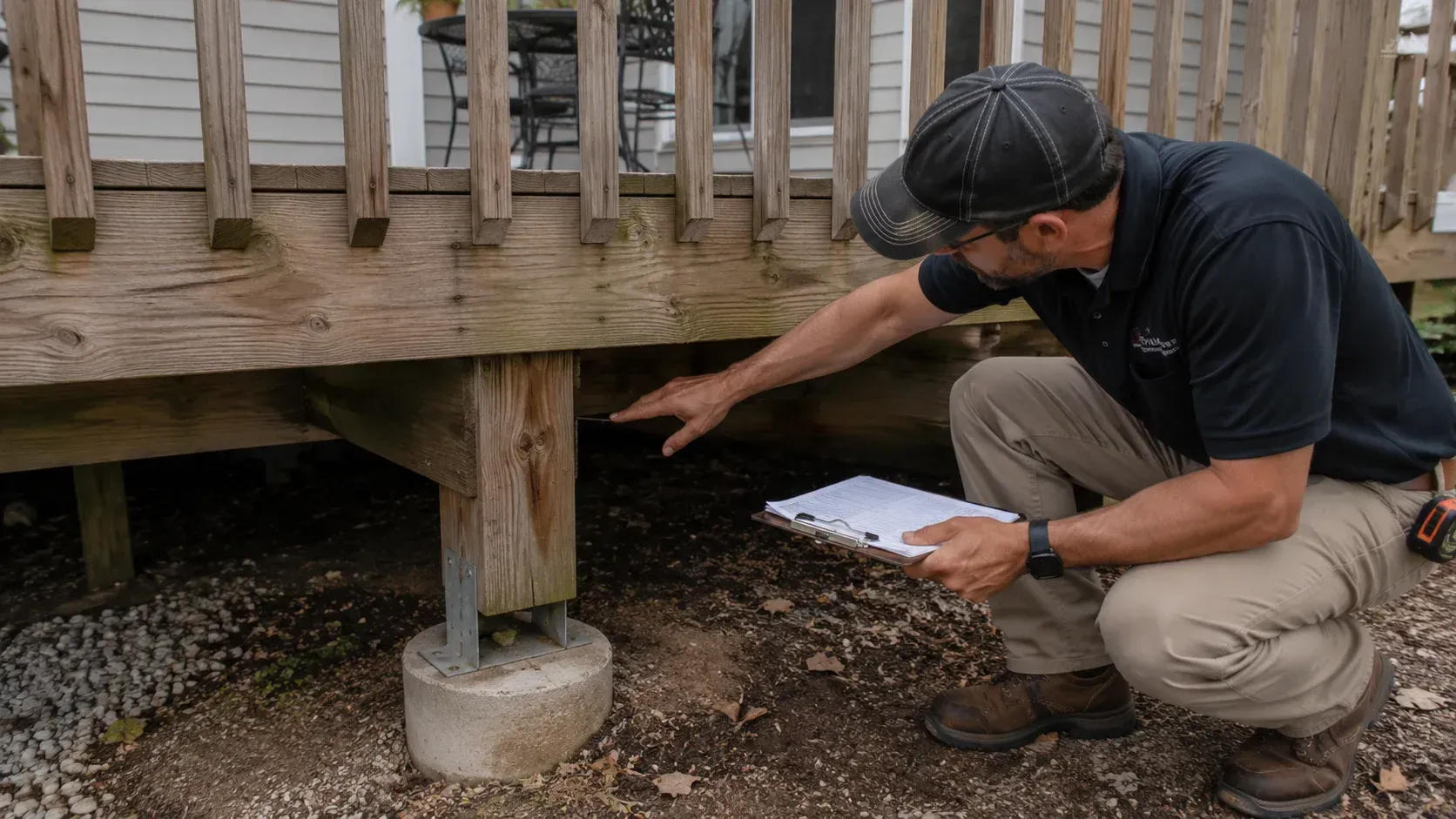
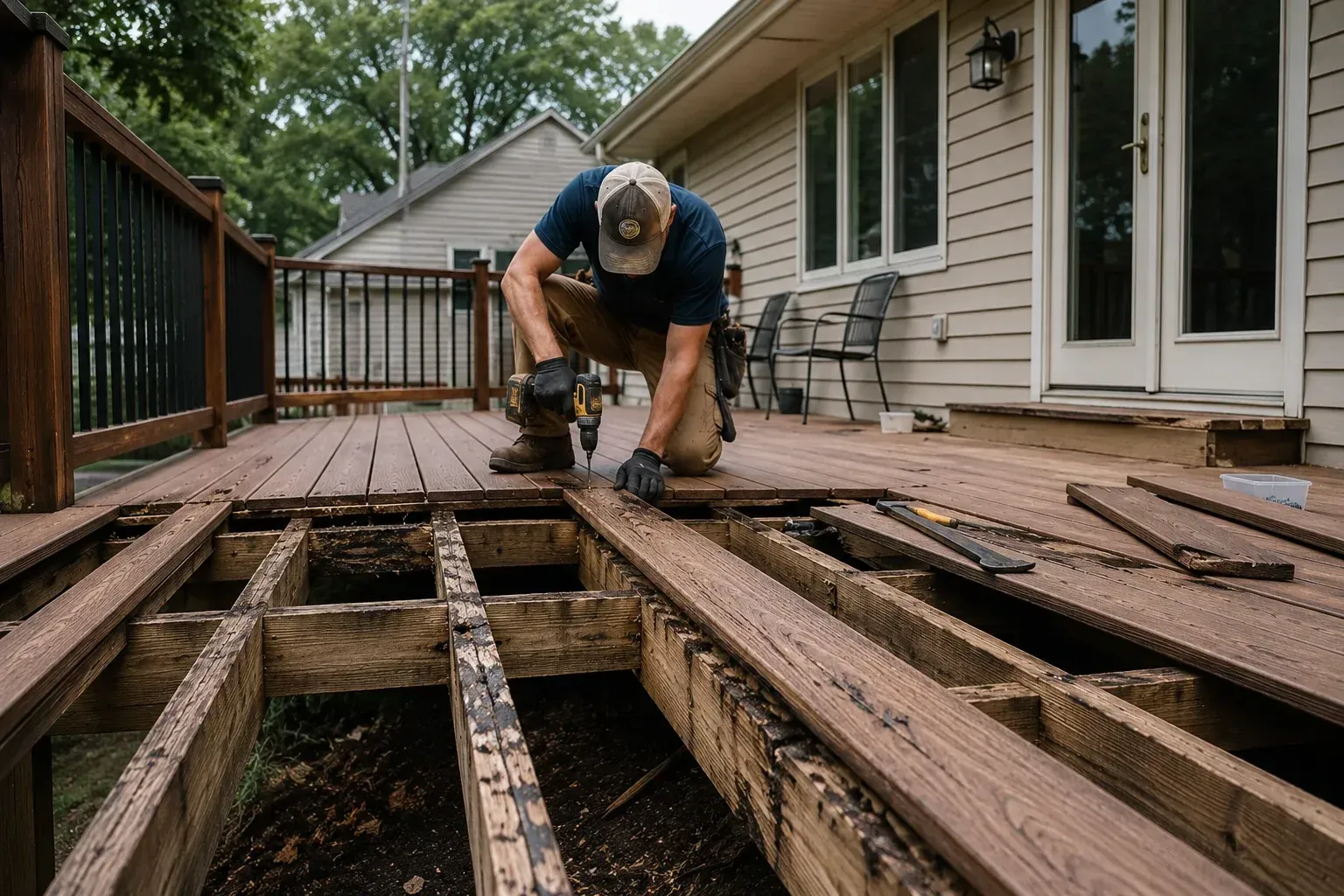
Whatever you choose, proper deck installation matters as much as the wood itself. Good drainage, correct spacing, and quality construction help any wood deck stand up to Missouri weather.
Making Your Decision
Start with your budget. If money is tight, pressure-treated pine gives you a solid, functional deck for the lowest cost. You'll trade some appearance and take on more maintenance, but it works.
If you want a natural look and have some room in your budget, cedar is a strong middle-ground choice. You get beauty and natural rot resistance without the redwood price tag.
If appearance is your top priority and budget isn't a limiting factor, redwood is the premium pick. Just be prepared for the cost and the possibility that it's harder to source in your area.
Also think about maintenance honestly. If you know you won't keep up with sealing and staining, that affects which wood makes sense - and it might even push you toward composite decking, which needs far less upkeep than any wood option.
Conclusion
Choosing between cedar, redwood, and pressure-treated pine comes down to balancing cost, appearance, durability, and maintenance. Pressure-treated pine is the most affordable and practical choice for many homeowners. Cedar offers natural beauty at a moderate price. Redwood is the premium option for those who prioritize looks and don't mind the cost.
There's no wrong answer here - just different trade-offs. The wood that's best for you depends on what you value most and how much you're willing to spend both upfront and on ongoing maintenance over the years.
Whatever you choose, remember that all wood decks need care to reach their full lifespan. Regular sealing and basic maintenance keep any of these woods looking good and performing well. Understanding these differences puts you in a good position to make a decision you'll be happy with for years to come.
Next Steps
If you're weighing your options for a new wood deck, talking through the details with someone who understands local conditions and materials can help clarify what makes sense for your situation. Getting clear, honest information about costs, maintenance, and how each wood performs in your area lets you make a decision with confidence rather than guesswork. There's no pressure - just good information to help you plan the right outdoor space for your home.
Frequently Asked Questions
Is cedar or pressure-treated pine better for a deck?
It depends on your priorities. Cedar looks more natural and resists rot without chemical treatment, but it costs more. Pressure-treated pine is more affordable and resists insects and rot well, but it needs more regular maintenance and doesn't look as rich. For budget-focused projects, pine often wins. For a natural look, cedar is worth the extra cost.
How long does each type of wood deck last?
With proper maintenance, all three can last 15 to 25 years or more. Pressure-treated pine tends toward the lower end without consistent sealing. Cedar and redwood can last longer thanks to natural rot resistance, but they still need periodic sealing to preserve their appearance and reach their full lifespan.
Which wood requires the least maintenance?
Honestly, none of them are maintenance-free. Cedar and redwood can be left to weather to gray without immediate structural harm, so if you're okay with that gray look, they need less frequent attention for appearance. Pressure-treated pine needs more consistent sealing to prevent cracking and warping. If low maintenance is your top priority, composite decking is worth considering over any wood.
Why is redwood so much more expensive?
Redwood is primarily grown on the West Coast and isn't as widely available as pine, which drives up cost, especially in the Midwest where shipping adds to the price. It's also prized for its beauty and natural durability, so demand keeps prices high. In some areas, it can be difficult to source at all.
Do cedar and redwood really resist insects naturally?
Yes, both contain natural oils and compounds that make them less appealing to insects and more resistant to rot than untreated wood. That said, "resistant" doesn't mean "immune." In very wet or humid conditions over many years, even naturally resistant woods can face problems, which is why sealing still helps.
Can I stain any of these woods a different color?
Yes, all three can be stained. Pressure-treated pine is often stained to improve its appearance since its natural look is plain. Cedar and redwood are frequently sealed with clear or tinted products to preserve their natural color. Keep in mind that darker woods like redwood are harder to stain lighter, so work with the wood's natural tone when possible.
What's the best choice for a humid climate like Missouri's?
Pressure-treated pine handles moisture well thanks to its treatment, making it a practical choice in humid areas. Cedar and redwood resist moisture naturally but benefit from regular sealing in humid conditions. Whichever you choose, proper installation with good drainage matters as much as the wood type for standing up to a humid climate.
Recent Posts