How Often Does a Wood Deck Need to Be Stained or Sealed?
Table of Contents
- How Often Should You Stain or Seal a Wood Deck?
- Stain vs. Seal: What's the Difference?
- What Actually Determines Your Deck's Schedule
- How to Test Whether Your Deck Is Due
- A Simple Decision Framework
- Common Misunderstandings About Deck Maintenance
- A Realistic Springfield Scenario
- What Typical Online Advice Overlooks
- Risks and Trade-offs of Getting the Timing Wrong
- Conclusion
- Frequently Asked Questions
Key Takeaways
- Most wood decks need to be re-stained or re-sealed every two to three years, but the right interval depends on the product used, sun and moisture exposure, and the wood species, not the calendar alone.
- The most reliable way to know if your deck is due is the water test: if water soaks in and darkens the wood instead of beading up, the protective layer has worn through.
- Horizontal, sun-exposed surfaces like the deck floor and stair treads wear far faster than shaded railings and vertical faces, so parts of the same deck often need attention at different times.
- Waiting too long is more expensive than staining too early, because a deck that has already started to gray, crack, or rot may need sanding, board replacement, or repair before it can be refinished.
- In a humid, four-season climate like Springfield's, moisture management and prep work usually matter more to the outcome than which brand of stain you choose.
How Often Should You Stain or Seal a Wood Deck?
Most wood decks should be re-stained or re-sealed every two to three years. Clear sealers and lightly tinted products often need reapplication every one to two years, while heavier semi-transparent and solid stains can last three to four years. The exact interval depends on your product, your climate, and how much sun and water the deck takes.
That range exists for a reason. A deck floor baking in full afternoon sun in Springfield will lose its finish faster than a covered porch. A clear water-repellent wears off sooner than a pigmented stain because pigment blocks the UV rays that break wood down. Softwoods like pressure-treated pine and cedar absorb and shed protection differently than denser hardwoods.
So the honest answer is not a fixed number. Two to three years is a planning estimate. The wood itself will tell you when it is actually due, and later in this guide there is a simple test to check.
Stain vs. Seal: What's the Difference?
People use "stain" and "seal" interchangeably, but they do different jobs, and the difference affects how often you reapply.
A sealer (or water repellent) is usually clear or barely tinted. It protects against moisture but offers little UV protection. Because it does not block much sunlight, the sun degrades it faster, which is why clear sealers often need reapplication every one to two years.
A stain adds pigment. That pigment shields the wood from UV damage, the main thing that turns a deck gray and brittle over time, so more pigment generally means longer protection. The spectrum, from least to most durable:
- Clear sealer: shortest lifespan, shows the natural wood, minimal UV protection.
- Toner / lightly tinted: slightly longer, hint of color.
- Semi-transparent stain: good balance of color, grain visibility, and durability.
- Solid / opaque stain: longest UV protection, hides the grain, behaves more like paint.
Practical implication: if you dislike frequent maintenance, a semi-transparent or solid stain will stretch your interval. If you want the natural wood grain to show and do not mind refreshing more often, a clear or lightly tinted product is the trade-off you are choosing.
What Actually Determines Your Deck's Schedule
The calendar is a starting point. These factors move the real interval up or down.
Sun exposure. UV light is the biggest driver of finish breakdown. A south or west-facing deck in direct sun needs refinishing sooner than a shaded one, and on the same deck the open floor fails before the shaded area under a table or against the house.
Moisture and drainage. Standing water, poor drainage, and constant shade that keeps boards damp all speed up wear and encourage mold and mildew. In a humid climate, moisture that lingers on the surface works against both the finish and the wood underneath.
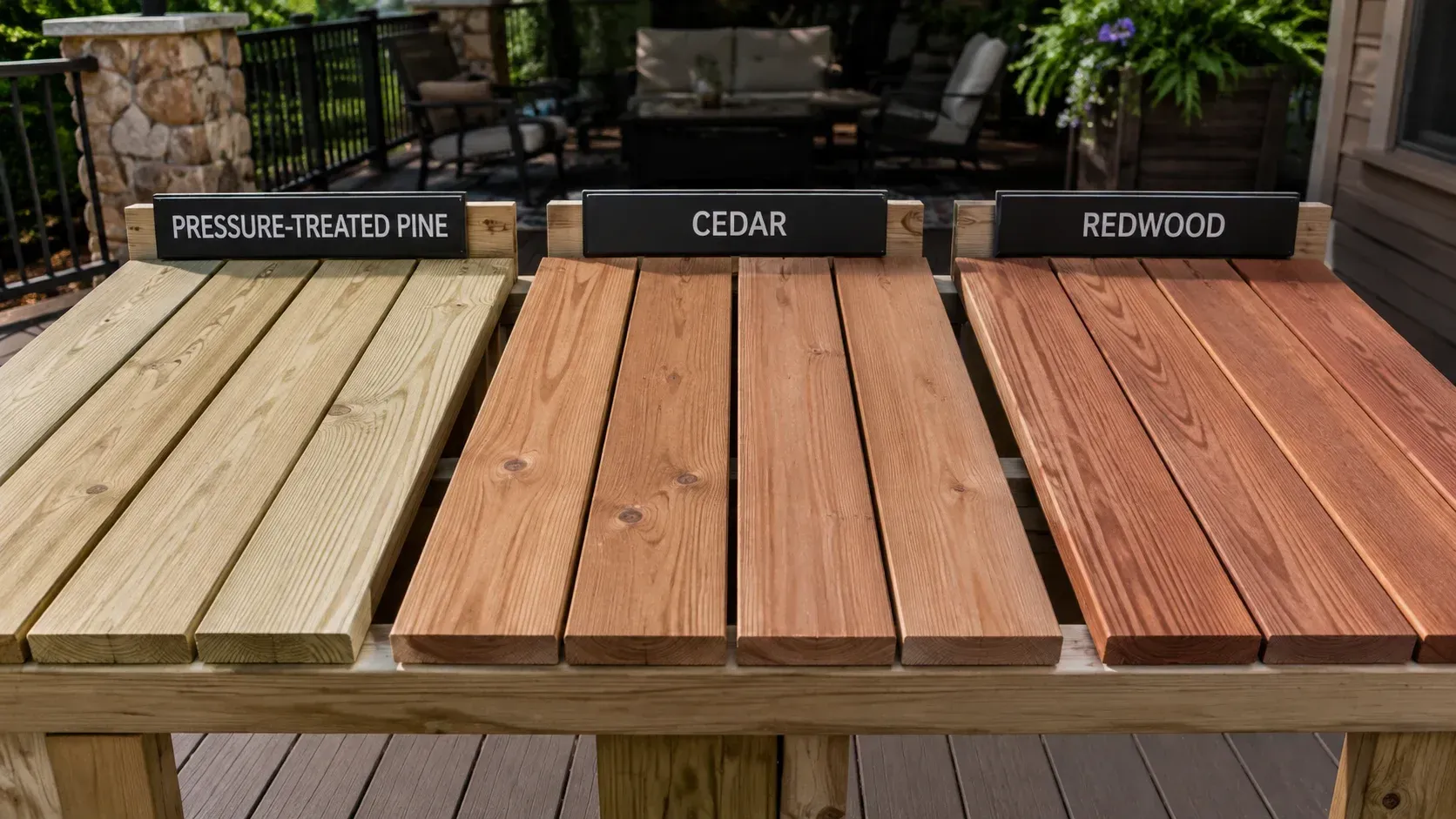
Wood species and age. Pressure-treated pine, cedar, and hardwoods absorb and hold stain differently. New wood often needs to dry before it will accept stain properly, while older, drier wood may drink up more product.
Foot traffic and use. A deck that hosts furniture, grills, and daily traffic wears in the high-use lanes first. Stair treads and the path from the door to the yard almost always fade before the edges.
Product and application. A stain applied to properly prepped, dry wood lasts longer than a better product applied over a dirty or damp surface. Prep is often the difference between a finish that lasts three years and one that peels in one.
How to Test Whether Your Deck Is Due
Sprinkle or pour a small amount of water onto the deck boards. If the water beads up and sits on top, the finish is still protecting the wood. If it soaks in and darkens the wood within a minute or two, the protection has worn through and it is time to re-stain or re-seal.
This water test is more reliable than counting years because it measures the actual condition of the finish, not an assumption. Do the test in a few spots: the open floor, a shaded area, and a stair tread. You will often find the floor fails the test while the railings still pass, which tells you where to focus.
Other signs it is due:
- The color has visibly faded or is turning gray.
- The surface feels rough or shows early splintering.
- Water no longer beads anywhere on the deck.
- You can see mildew, dark blotches, or thin cracks forming.
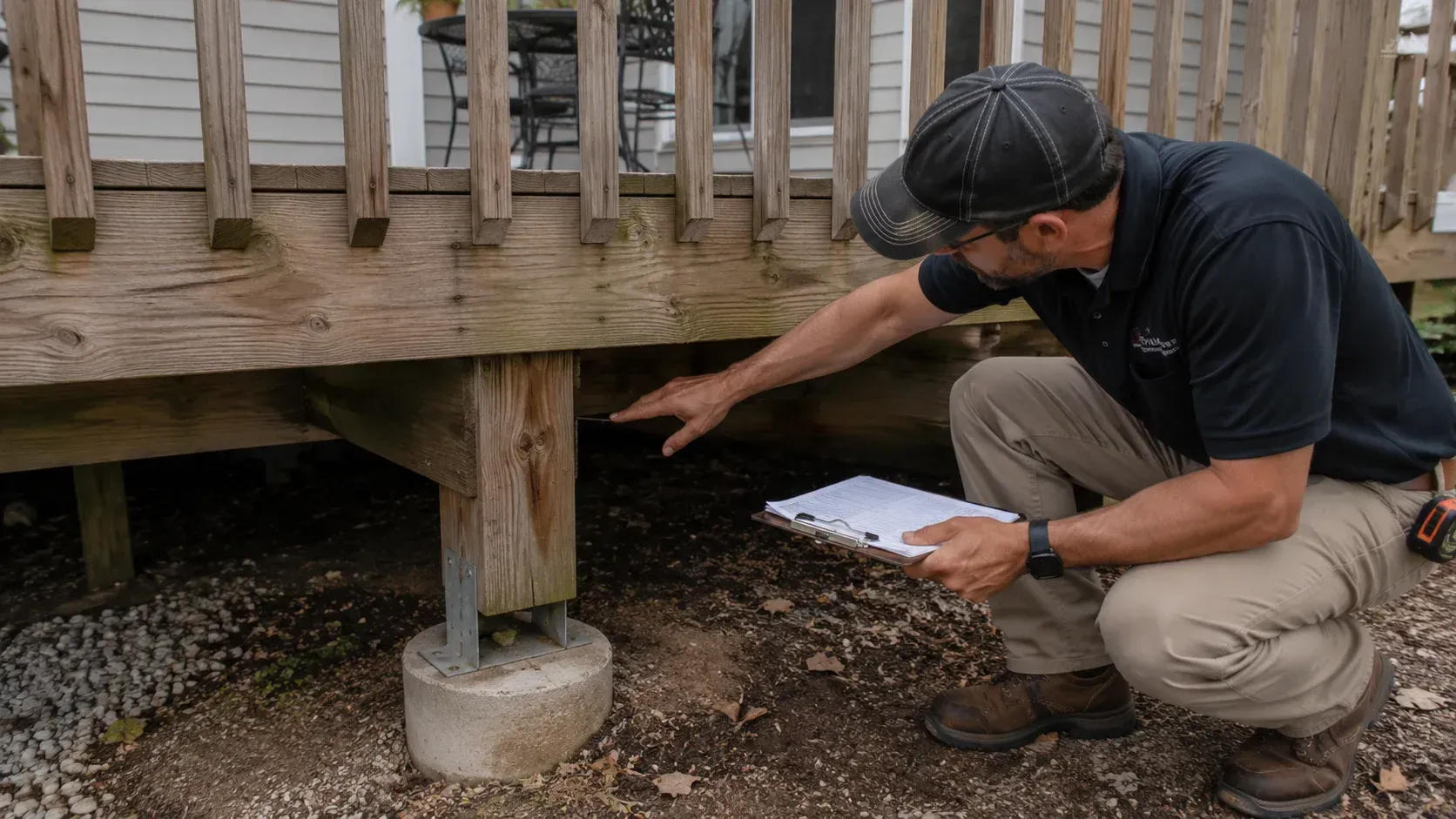
Limitation: the water test tells you the finish is worn, but it does not tell you whether the wood underneath is still sound. If you see soft spots, deep cracks, or wobble, the deck may need deck repair before any stain goes on. Refinishing rotten wood only hides the problem.
A Simple Decision Framework
When you are deciding what to do and when, work through these questions in order.
| Step | Question | What it tells you |
|---|---|---|
| 1 | Does water still bead on the boards? | If yes, you can usually wait. If no, plan to refinish. |
| 2 | Is the wood structurally sound (no soft spots, rot, or wobble)? | If no, repair before refinishing. |
| 3 | How much sun and moisture does the deck take? | Heavy exposure shortens the interval; adjust expectations. |
| 4 | Do you want to minimize future maintenance? | If yes, choose a more pigmented stain for a longer interval. |
| 5 | Is the surface clean, dry, and prepped? | Refinish only after proper cleaning and drying, or the finish fails early. |
This framework matters because the most common mistakes come from skipping a step, usually staining over a dirty or damp deck, or refinishing wood that actually needed repair first.
Common Misunderstandings About Deck Maintenance
Common belief: "You should stain your deck every year." What is actually true: Annual staining is only necessary for clear sealers or heavily exposed decks. Most pigmented stains last two to four years, and staining too often can lead to buildup, especially with film-forming solid stains. Why it matters: Over-applying wastes money and product, and can create a thicker film that peels rather than wears evenly.
Common belief: "Sealing and staining are the same thing." What is actually true: Sealing focuses on water repellency; staining adds pigment for UV protection. Many products do both, but a clear sealer alone gives limited protection against the sun. Why it matters: Choosing a clear sealer when you needed UV protection means the deck grays faster and you refinish sooner than expected.
Common belief: "New pressure-treated wood should be sealed right away." What is actually true: Fresh pressure-treated lumber often holds moisture from the treatment process and may need to dry out before it will accept stain. Applying too early can trap moisture or cause the finish to fail. Why it matters: Staining new wood on the wrong timeline can waste the whole effort. Manufacturer guidance for the specific product is the best reference here.
Common belief: "A more expensive stain always lasts longer." What is actually true: Product quality helps, but preparation and application usually matter more. A mid-range stain on clean, dry, properly prepped wood typically outlasts a premium stain applied over a dirty or damp surface. Why it matters: Homeowners sometimes spend on the product and skimp on prep, then blame the stain when it fails early.
A Realistic Springfield Scenario
The following is a hypothetical example used to illustrate how timing plays out. It is not a description of a specific project.
Imagine a Springfield homeowner with a west-facing pressure-treated pine deck, stained three years ago with a semi-transparent product. The floor gets full afternoon sun; a covered section near the door stays shaded. On the water test, the shaded boards still bead water, but the sun-exposed floor and stair treads soak it up and have started to gray.
This deck does not need a full strip-and-refinish. The practical move is to clean the whole deck, let it dry fully, and re-coat the worn floor and treads, feathering into the still-protected areas. The shaded section may get another year. This is why "the whole deck, every X years" is often the wrong mental model: different zones age at different rates, and matching the work to the wear saves time and money.
What Typical Online Advice Overlooks
Most articles give you the two-to-three-year rule and stop there. Here is what that advice tends to skip.
Prep and drying time are the real project. The staining itself is quick. Cleaning the deck, letting it dry for the recommended time (often 24 to 48 hours or more in humid weather), and picking a dry-weather window is what determines success. Planning around the forecast matters more than the brand on the can.
Decks do not wear evenly. Generic advice treats the deck as one surface. In reality, horizontal, sun-exposed boards fail years before shaded verticals, so a single schedule means you either over-maintain the railings or under-maintain the floor.
The cost of waiting is not linear. Refinishing a worn but sound deck is a maintenance cost. Refinishing a deck that has already grayed, cracked, or begun to rot is a repair cost, since you may need sanding, board replacement, or structural work first. Past the point where water stops beading, maintenance increasingly turns into repair.
Sometimes the honest answer is a different material. If the maintenance cycle is a burden you keep putting off, that is worth acknowledging. Some homeowners eventually decide that composite decking, which does not need staining or sealing, fits their tolerance for upkeep better than any wood. That is a legitimate outcome of thinking this through, not a failure.
Risks and Trade-offs of Getting the Timing Wrong
Timing errors go in both directions, and each has a cost.
Staining too early or too often can cause product buildup, uneven appearance, and, with film-forming solid stains, peeling. It wastes money on protection the deck did not yet need. Less damaging than waiting too long, but not free.
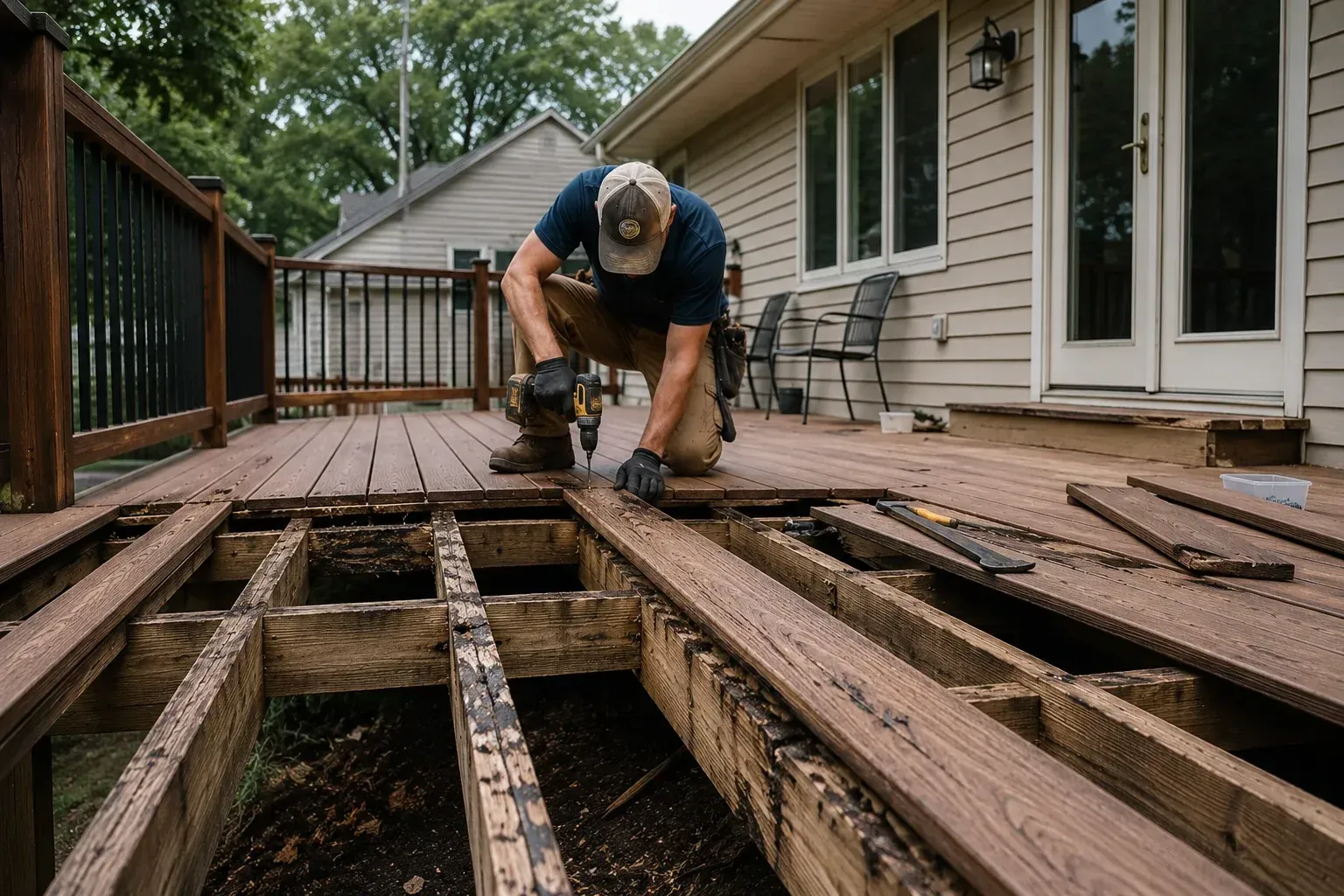
Waiting too long is the more common and more expensive mistake. Once the finish wears through, UV and moisture attack the wood directly: the surface grays, fibers lift, and cracks form. At that point you may need to sand or strip the deck, replace boards, or address rot before any new finish will hold. A weekend of cleaning and re-coating becomes a larger project.
A reasonable rule of thumb: it is better to refinish a little early than to discover you waited too long. The water test keeps you from guessing in either direction.
One more trade-off worth naming: quality of construction affects how forgiving your maintenance schedule is. A deck built with good drainage, proper board spacing, and sound materials sheds water and dries faster, which extends the life of every finish you apply. If you are planning a new build or a rebuild, the deck building decisions you make up front shape the maintenance you will live with for years.
Conclusion
The short version is that most wood decks need staining or sealing every two to three years, but the real schedule is set by your product, your exposure, and the condition of the wood, not the calendar. Clear sealers wear out fastest, pigmented stains last longest, and sun-exposed horizontal surfaces always fail before shaded ones.
The single most useful habit is the water test. When water stops beading and starts soaking in, the finish has done its job and it is time to refinish, regardless of how many years it has been. Testing beats guessing, and it keeps a routine maintenance task from quietly becoming a repair.
For homeowners and business owners in Springfield's humid, four-season climate, prep work and moisture management usually matter more than which stain you buy. A clean, dry, well-drained deck holds a finish longer, and catching wear early is almost always cheaper than fixing damage later. With that understanding, you can build a maintenance rhythm that fits your deck rather than a generic rule.
Get Guidance on Wood Deck Staining and Sealing in Springfield
If you are unsure whether your deck is due, or whether it needs refinishing versus repair, a straightforward assessment can save you guesswork. Questions about wood deck staining, sealing intervals, or maintenance for your specific deck in Springfield, MO are worth asking before you buy a single can of stain. You can
contact us to talk through your deck's specifics. Clear information up front helps you plan the right work at the right time, with no pressure to do more than your deck actually needs.
Frequently Asked Questions
How do I know if my deck needs staining or just cleaning?
Run the water test. If water beads up, the finish is intact and the deck may only need cleaning. If water soaks in and darkens the wood, the finish has worn through and it is time to re-stain or re-seal.
Can I stain a deck that has never been treated?
Yes, but timing matters. New pressure-treated wood often needs to dry out first, sometimes weeks or months, before it will accept stain. Check the specific product's guidance, and always start with a clean, dry surface.
Is sealing or staining better for a wood deck?
Neither is universally better. Sealers focus on water repellency and show the natural wood but offer little UV protection. Stains add pigment that blocks UV and last longer. The right choice depends on the look you want and how often you want to refinish.
How long does a deck need to dry before staining?
After cleaning or rain, most decks need at least 24 to 48 hours of dry weather before staining, and longer in humid conditions. Applying stain to damp wood is a common reason finishes fail early, so plan around the forecast.
Does staining a deck prevent rot?
Staining and sealing slow moisture penetration and UV damage, which reduces the conditions that lead to rot, but they do not make wood rotproof. Good drainage, airflow, and prompt refinishing matter too. Wood already rotting needs repair, not just a new coat.
Recent Posts